
Measuring curtains isn’t just about the window size—it’s where your style meets function for summer living. Many people size only for the glass and end up with curtains that look too short or don’t block enough light. This guide shows you how to measure curtains for the right fit, fullness, and light control so your drapery looks polished and performs perfectly. Grab our quick checklist and get ready to book your free in-home design consultation! For more tips on measuring curtains, check out this guide.
Mastering Curtain Measurements
Understanding how to measure your curtains is essential for achieving the perfect look and function. Let’s dive into the key elements that will make your curtains summer-ready.
Light Control and Privacy
When it comes to curtain function, light control and privacy are top priorities. You want to enjoy natural light during the day while maintaining privacy at night. Blackout curtain measurements are crucial here. They keep your room dark when needed and protect against the harsh sun. Opt for curtains that extend beyond your window frame to block out light completely. This approach also offers added privacy, a must-have for those living in busy neighborhoods.
But it’s not just about blocking light. You also want to ensure your curtains allow for some daylight when desired. Consider using a combination of privacy lining vs blackout lining. This gives you flexibility, letting you switch between total privacy and filtered light. It’s a balance that enhances your living space’s overall comfort and utility.
Achieving Perfect Fullness
Curtain fullness refers to how much fabric you have compared to the width of your window. Proper fullness ensures that when curtains are closed, they still look rich and luxurious. Aim for a fullness ratio of 2 to 2.5 times the window width. This means if your window is 4 feet wide, you’ll need about 8 to 10 feet of curtain fabric. Achieving this will give your room a plush feel.
Consider ripple fold measurements or pinch pleat drapery styles for a tailored finish. Each style offers a different look and feel, so choose based on your interior design goals. For a modern aesthetic, ripple folds are sleek and minimal. If you’re going for classic elegance, pinch pleats deliver that luxury touch.
Spotting Common Pitfalls
It’s easy to make mistakes when measuring for curtains, but awareness is## Mastering Curtain Measurements
Understanding curtain measurements transforms your space, balancing style with function. Let’s explore light control, fullness, and common mistakes to ensure you achieve the perfect look.
Light Control and Privacy
Achieving the right light levels in your home can be challenging. Curtains help manage this while also offering privacy.
-
Control Light: Choose fabrics based on how much light you want to let in. Sheer curtains add a soft glow, while thicker fabrics prevent too much sun.
-
Privacy Matters: For more privacy, consider lining options. Blackout curtains are ideal for bedrooms to block light and sound. Explore different opacities to match your needs.
-
Layering for Precision: Combine different curtain types for versatility. Sheers with blackout panels let you adjust light as needed.
Achieving Perfect Fullness
Fullness adds elegance to your curtains, creating a luxurious appearance. Here’s how to get it right:
-
Measure Width: Ensure your curtains are 1.5 to 3 times the width of your window. This achieves that full, gathered effect.
-
Factor in Fabric Type: Thicker fabrics need less fullness, while lighter ones may require more. Adjust based on the material’s weight.
-
Consider Pleats: Pinch pleats provide a tailored look, enhancing fullness with minimal effort.
Spotting Common Pitfalls
Avoid common measuring mistakes by understanding where most go wrong.
-
Sizing Only the Glass: Measure beyond the glass to ensure coverage. Curtains should extend several inches beyond the window frame.
-
Forgetting Stack Back: Account for the space curtains occupy when open. This avoids blocking your view.
-
Ignoring Hardware: Include rod dimensions in your measurements. This prevents ordering curtains that are too short or long.
Essential Measurement Techniques
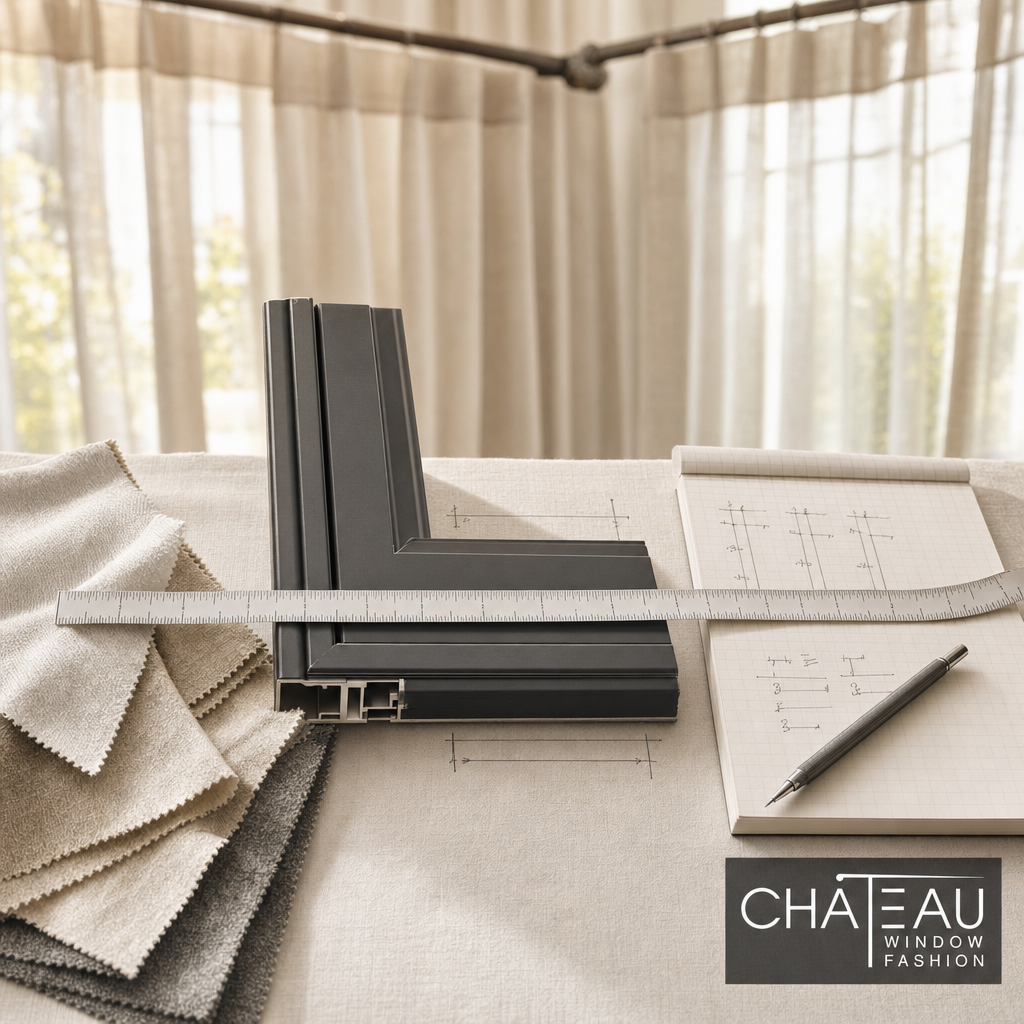
Now that you know what to avoid, let’s dig into the techniques that ensure your curtains fit just right. From rod height to coverage, these tips guarantee a polished look.
Curtain Rod Height Tips
Placement of your curtain rod plays a key role in the final look of your drapes.
-
High and Wide: Install rods 4-6 inches above the window frame to create an illusion of height. Extend rods 3-6 inches beyond the frame for maximum light coverage.
-
Consider Ceiling Height: If your ceilings are high, hang curtains closer to the ceiling for a dramatic effect. This technique elongates your room visually.
Stack Back and Coverage
Understanding stack back ensures your curtains don’t block too much light when open.
-
Calculate Stack Back: Allow enough wall space for curtains to gather without obstructing the view. This typically requires 1/3 of the window width.
-
Maximize Window Exposure: Proper stack back placement keeps windows fully visible, letting in more natural light.
Ceiling-to-Floor Drapes Explained
Ceiling-to-floor drapes offer a sleek, finished look. Here’s why they’re worth considering:
-
Elegant and Modern: Drapes that touch the floor add sophistication. Measure from ceiling to floor for exact length.
-
Functional Benefits: These drapes also help insulate your space, improving energy efficiency and comfort.
Booking a Professional Consultation

While DIY is great, professional help ensures perfect results. Learn the advantages of expert guidance for your curtain projects.
Benefits of Expert Guidance
Professionals bring expertise that simplifies the measuring process.
-
Accurate Measurements: Experts ensure all dimensions are precise, preventing costly mistakes.
-
Tailored Advice: Receive suggestions on fabric and styles suited to your space’s needs. Professionals consider your room’s lighting, decor, and functionality.
Seasonal Installation Offers
Take advantage of seasonal offers to upgrade your home’s look.
-
Summer Specials: Many providers offer discounts during peak seasons. These savings make it an ideal time to invest in new window treatments.
-
Timely Upgrades: An early-summer refresh keeps your space stylish and comfortable as the warm months approach.
Planning for Energy Efficiency
Curtains do more than beautify spaces; they enhance energy efficiency too.
-
Insulating Properties: Choose lined curtains to keep rooms cool in summer and warm in winter. This reduces energy costs significantly.
-
Environmentally Conscious Choices: Opt for eco-friendly materials that benefit both your home and the planet.
By measuring accurately and considering these tips, you’ll enjoy beautiful, functional curtains that make your home feel complete. For more in-depth measurement instructions, visit this informative guide.
Leave a comment